Vitalik Buterin’s vision for “network states” could revolutionize how communities form and govern themselves, but there are two major hurdles standing in the way.
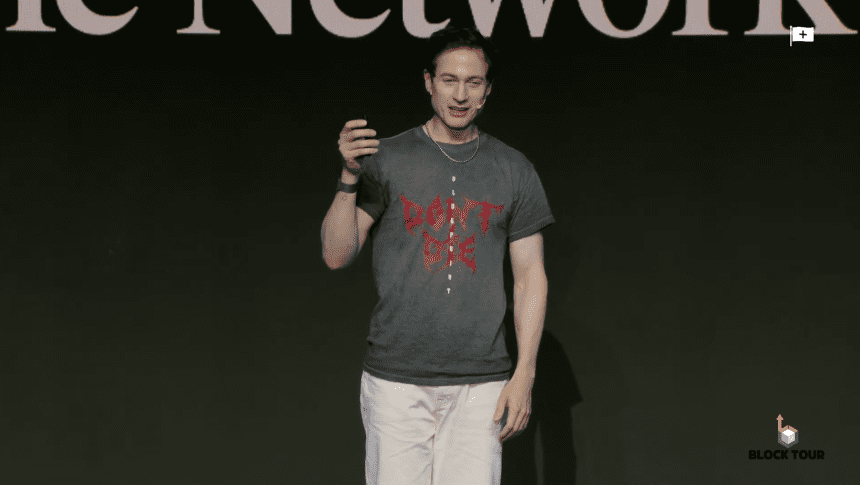
At the Network State Conference 2024 in Singapore, Ethereum co-founder Vitalik Buterin took the stage to discuss his bold vision for “network states”—digital communities transitioning into physical, autonomous societies.
While the idea is gaining traction, Buterin admits two major obstacles remain: solving governance and membership.
Reflecting on his Zuzalu experiment, Buterin shared his experience of assembling 200 participants—including Ethereum enthusiasts, crypto execs, biotech innovators, and scientific researchers—for a 60-day experiment in Montenegro from March to May 2023.
The goal?
To collaborate on societal challenges, such as human longevity, in a real-world setting. Despite the healthy lifestyle, cold plunges, and yoga that fostered camaraderie, Buterin acknowledged the experiment failed to offer a clear direction on governance.
Also Read: Comparison of Layer 2 and Execution Sharding: Vitalik Reveals Key Differences
Network states, according to Buterin, could allow these communities to draft their own regulations, bypassing the stifling over-regulation often seen in the West. But the big question remains: how do we implement these self-governing structures effectively?
Buterin emphasized that “popup cities” offer a sci-fi-like medium where we can plan for the future by thinking ten steps ahead.

However, he cautioned against the kind of tribalism rampant on social media, calling it “zero-sum and unproductive.” Instead, he stressed the importance of fostering positive, cooperative relationships between these network states.
He concluded by affirming that while popup cities show potential and fit a niche, governance and membership issues must be resolved for the concept to fully take off. “To go further from here, the path depends on the goal,” Buterin remarked, urging more collaboration—even among those with differing objectives.
Originally proposed by Balaji Srinivasan and expanded by Buterin in 2022, network states offer a futuristic blend of individualism and community, positioning themselves as the next evolution of libertarianism. The future of self-governing societies may very well depend on solving these critical issues.