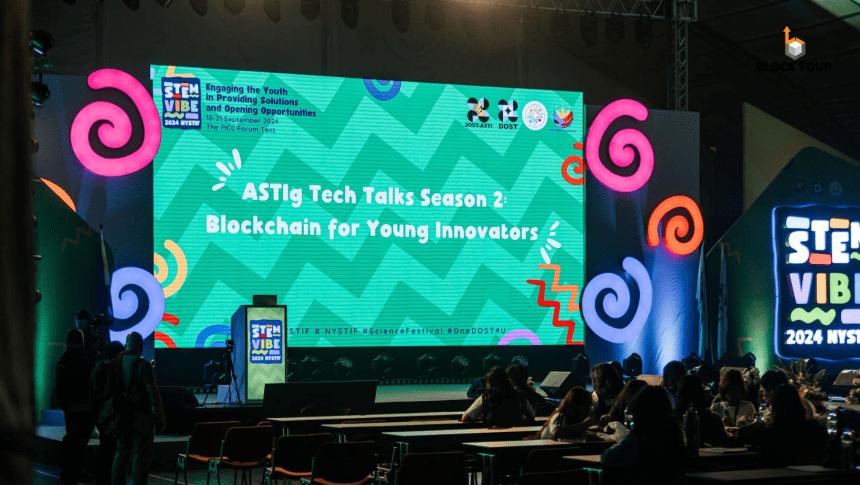
The Philippines is putting the future of blockchain and emerging tech directly into the hands of its youth!
On September 20, the Department of Science and Technology-Advanced Science and Technology Institute (DOST-ASTI) hosted a tech forum aimed at introducing students to the vast potential of blockchain, artificial intelligence (AI), and non-fungible tokens (NFTs).
Here’s the plot twist: the event wasn’t just a lecture but a chance for students to dive deep into technologies that are reshaping industries worldwide.

DOST-ASTI emphasized that cutting-edge tech like blockchain is revolutionizing both public and private sectors. As senior science research specialist Roxanne S. Aviñante pointed out, blockchain is an area with booming job demand, making it a valuable skill for future innovators.
This forum aimed to ignite young minds with the potential of blockchain, encouraging them to explore science, technology, and innovation as powerful tools to create a better and sustainable future”
Marc Jerome T. Tulali, another expert from the institute, expanded on the real-world applications of blockchain, highlighting uses in voting systems and secure data storage.
Also Read: Bitcoin reaches all-time high in local currencies of Japan, Argentina, and the Philippines
One particularly exciting initiative is the country’s development of the SIERRA system, a blockchain-based platform for managing intellectual property. This system empowers individuals with self-sovereign identity, showcasing how blockchain can revolutionize key sectors.
The event also explored blockchain’s impact on industries like gaming, healthcare, finance, and even the central banking system. Tulali introduced students to decentralized finance (DeFi) and central bank digital currencies (CBDCs), offering a glimpse into the future of money.
And the Philippines is already ahead of the curve when it comes to national blockchain adoption. In May, the country’s central bank, Bangko Sentral ng Pilipinas (BSP), launched a controlled trial of the PHPC stablecoin, pegged 1:1 to the peso.
Partnering with Coins.ph, they’re testing the PHPC in real-world conditions, with a focus on enhancing remittances—a critical sector as the Philippines ranks fourth in global remittance inflows.
As the forum made clear, the Philippines is serious about equipping its youth with the skills they need to thrive in a blockchain-powered future, with the potential to transform not only their lives but also the country’s economy.