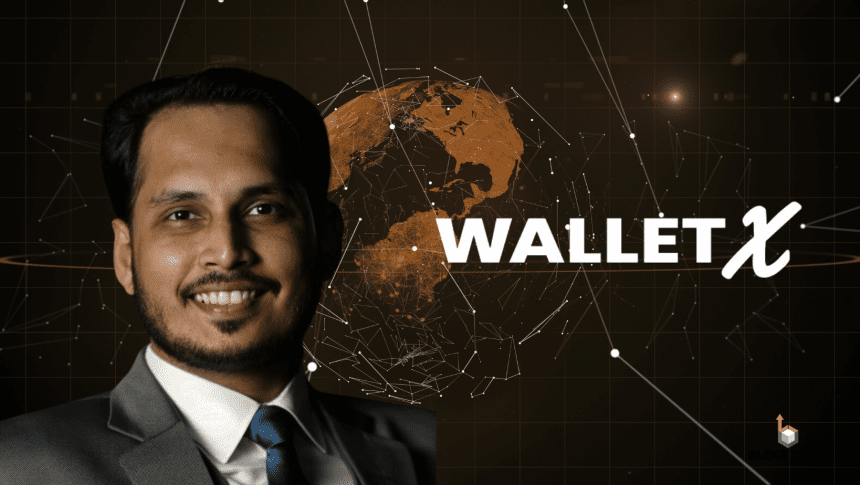
“Bitcoin is the power of the sun!” – CryptoRohittt
Last week, we had the privilege of speaking with CryptoRohittt, co-founder of WalletX, the world’s first 100% gasless web3 wallet.
Setting the Tone with Bitcoin’s Potential
Before the AMA officially began, Rohit set the stage with a discussion on Bitcoin’s price evolution and his unwavering belief in the potential of cryptocurrency. This initial conversation provided clear insight into his deep conviction and passion for the crypto space.
Rohit’s Journey in the Crypto World
Rohit’s commitment to crypto began in 2017, and since then, he has played a pivotal role in the growth of several web3 giants like WazirX and BitMart. His innovative marketing initiatives in India have significantly contributed to the expansion and adoption of these platforms.
The Birth of WalletX
Rohit identified a major hurdle in onboarding people to web3: the complex process of signing up for a centralized wallet, compounded by the need to pay gas fees on each transaction. Gas fees are necessary to incentivize validators in blockchain networks, particularly those using Proof of Stake (PoS) mechanisms. WalletX aims to solve this problem by eliminating gas fees and introducing an advertising layer similar to Google Ads or Meta Ads in web2.
Proving the Concept
While many web3 projects are still in the fundraising stage based on innovative ideas alone, WalletX is already ahead of the curve. With a dedicated team of 13 members, the project has surpassed 80,000 lines of code, and the app is fully ready for download and exploration.
How Does WalletX Eliminate Gas Fees?
Before diving into WalletX’s mechanism, Rohit first explained the concept of gas fees. “Imagine validators across the network working to maintain the blockchain by processing and validating transactions. These validators are compensated through gas fees, which users historically had to pay.”
CryptoRohittt introduced an innovative solution where WalletX uses sponsorships and ads to cover these gas fees. Here’s how it works: Before finalizing an on-chain transaction on the WalletX platform, users have the option to view a 10-second ad. In return, the advertiser sponsors the gas fees, enabling the transaction to proceed without cost to the user.
Expanding Reach and Multi-Chain Compatibility
WalletX is already active on 13 EVMs, including Ethereum, Polygon, BNB, and Coinbase, among others. Moreover, the wallet can be made compatible with hundreds more chains by adding RPC to the backend. The project’s future plans include becoming an omni-wallet, enabling multi-chain compatibility across any given chain.
Non-Custodial Wallet and Security
On August 3, Indian crypto exchange WazirX experienced a $250 million exploit that shook the crypto landscape. Having worked closely with the WazirX team, Rohit noted that the team always has the community’s best interest at heart, which gives him confidence in their intentions.
But is WalletX ready for a similar scenario?
Rohit explained that WalletX is a non-custodial wallet, meaning the project does not hold user funds. The wallet owner is the sole person with access to their private key, and if they lose it, they lose access to all their crypto. This raises a critical question: Is the world ready to take responsibility for its own private keys?
To address this concern, Rohit introduced the concept of social login. For example, a user can log in using their email address, making the wallet custodial and backed up through their Gmail account. Rohit also mentioned that WalletX users will be able to log in through email addresses within the next month.
Looking Ahead: Exciting Features on the Horizon
WalletX has several exciting features in the pipeline. One such feature is “Blinks,” which will allow users to book seats for an AMA directly through the wallet and claim their tickets as NFTs from X. Additionally, to simplify the user experience, WalletX has removed the repetitive onboarding process. All users need to do is download the wallet and create their account. With the elimination of gas fees, users no longer have to register on third-party platforms or complete KYC.